

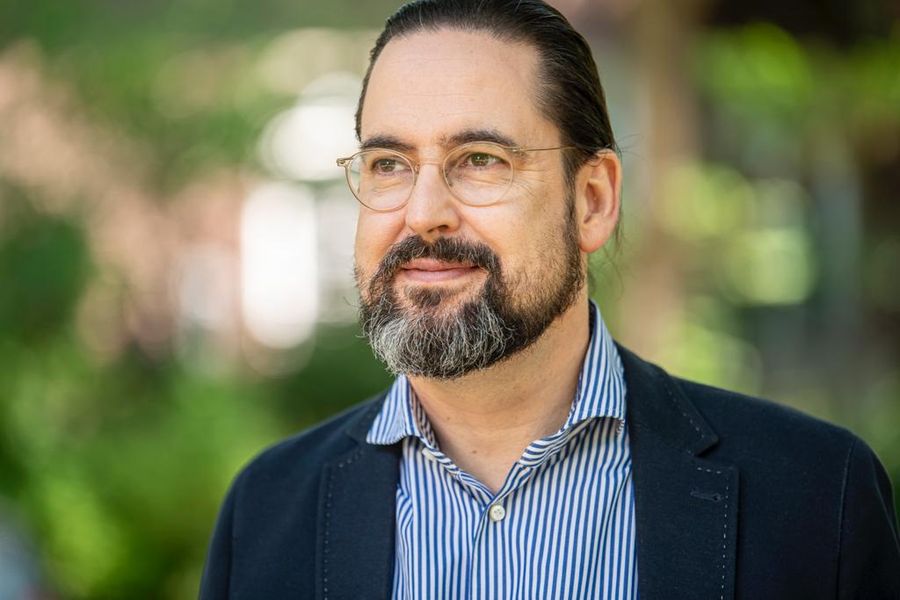
Dr. Kuche in an interview
Losing Energy After 40? Cardiologist Dr. Kuche Explains What Matters Most Now
Constantly exhausted? Cardiologist Dr. Kuche explains why getting the right micronutrients becomes very important for everyday well-being after 40.
Whether it’s while jogging around Lake Maschsee, during stressful weeks of meetings, or while gardening—when it’s time to trim the hedges—many people realize, by the time they turn 40 at the latest, that their batteries don’t recharge quite as quickly as they used to. When exhaustion becomes a constant companion, it’s worth taking a closer look at the underlying processes in our bodies.
This is exactly where Dr. Heinz-Christian Kuche comes in. At his practice, Cardio & Vitality in Hanover, the specialist in internal medicine and cardiology combines traditional conventional medicine with functional medicine and stress medicine. His philosophy: Don’t just treat individual symptoms, but take a holistic view of the patient—from the major organs all the way down to energy supply at the cellular level.
In addition to sufficient sleep and exercise, a daily supply of micronutrients plays a crucial role in our vitality. In this interview, Dr. Kuche explains just how important these tiny building blocks are for our bodies and what signals we should pay attention to starting in middle age.
Dr. Kuche, after age 40, many people feel that their energy, resilience, and ability to recover are declining. Is this simply the beginning of aging, or is there more to it than that?
Dr. Kuche: After age 40, the body often starts to show signs not because it’s getting “old,” but because it’s reacting more honestly. Energy, resilience, and recovery depend heavily on sleep, stress levels, muscle mass, blood pressure, blood sugar, inflammatory activity, and micronutrient status. From a cardiological perspective, I therefore look not only at the macro level of organs such as the heart and blood vessels, but also at the regulatory capacity of cellular metabolism—such as iron balance, the levels of vital substances in cells, and the levels of essential fatty acids and amino acids. Hormones can also play a role and should be carefully evaluated in the context of symptoms—a single lab result does not constitute a diagnosis. My guiding principle is: It is not age that is the enemy, but the accumulation of unheeded signals.
Many men don’t realize it until it’s too late: The body sends signals that are ignored for too long. What signs should you take seriously once you turn 40?
Dr. Kuche: You should take seriously shortness of breath during physical exertion, pressure or tightness in the chest, heart palpitations, an unusually rapid decline in physical performance, dizziness, newly elevated blood pressure readings, and a significant increase in waist circumference. Sleep disturbances, loud snoring, daytime sleepiness, and unexplained exhaustion are also not trivial matters—they can sometimes serve as subtle warning signs. For men, erectile function is also part of vascular health: erectile dysfunction can be an early sign of circulatory and vascular problems. The body usually whispers before it screams—it’s wise to listen to those whispers. Early evaluation isn’t a sign of weakness, but rather of good stewardship of your own “body as a business.”
How do metabolism and hormonal balance change starting in midlife—and what role do micronutrients play in this process?
Dr. Kuche: Starting in middle age, muscle mass, insulin sensitivity, sleep architecture, and hormonal regulation often change—not dramatically overnight, but more like a dimmer switch being slowly turned down. Testosterone isn’t a magic button here, but rather part of a larger interplay involving sleep, stress, exercise, belly fat, nutrition, and inflammatory balance. In this “orchestra of health,” micronutrients serve as the music stands and tuning devices: Vitamins B6, B12, and folate are involved, among other things, in homocysteine metabolism, while vitamin D plays a role in bone health, muscle function, immune function, and metabolic processes. As an essential trace element, zinc is involved in numerous enzymatic functions and is found primarily in muscles and bones. Coenzyme Q10 is also particularly interesting; it is involved in energy production in the mitochondria—the tiny powerhouses of our cells—and the heart muscle, in particular, relies on a stable energy supply. With advancing age and under certain stressors, the body’s own supply of Q10 can decline, which is why it may be worthwhile to consider it specifically in the context of energy metabolism—not as a miracle cure, but as a biochemically plausible building block. Micronutrients do not provide “artificial energy” like an espresso, but they help ensure that the body’s biochemical powerhouses run smoothly.

Even though it's often hard to get started, regular exercise keeps you fit and promotes good health.
Not every man over 40 eats a balanced diet every day. For whom is a micronutrient supplement particularly beneficial?
Dr. Kuche: A supplement can be particularly beneficial in cases of proven deficiencies identified through a vital substance analysis, an unbalanced diet, a vegetarian or vegan diet, limited sun exposure, high stress levels, intense physical activity, chronic gastrointestinal problems, or medications such as metformin and acid blockers, which can, for example, affect vitamin B12 levels. In my practice, I regularly perform nutrient analyses—and I can say with certainty that in 9 out of 10 analyses, deficiencies are detected without supplementation. A broad-spectrum micronutrient concentrate can serve as a practical basic supplement in everyday life when there are nutritional gaps, but it is no substitute for fresh foods, diagnostic testing, or lifestyle changes.
Single-ingredient supplements or combination concentrates—what’s the best way to optimize your intake, and what factors matter most?
Dr. Kuche: Single-ingredient supplements make sense when there’s a specific deficiency or a clear therapeutic need—such as for vitamin D, B12, iron, or omega-3 fatty acids—following appropriate diagnostic testing. Combination supplements can serve as a practical foundation for daily use when the goal is not high-dose therapy but rather a broad, basic supply of all relevant micronutrients. In fact, our modern, processed diet often fails to provide an adequate supply. A micronutrient supplement can serve as an example of a practical addition here, but it should be viewed objectively: It is not a medication and is no substitute for sleep, exercise, strength training, and a natural, diverse diet. What matters most are quality, tolerability, appropriate dosing, avoiding unnecessary megadoses, and whether the individual is ultimately truly more stable, more productive, and better nourished. Good medicine does not begin on the supplement shelf, but with the right questions and proper diagnosis.
Many men want to stay fit and active—but have little time. What is your most important piece of advice for a healthy daily routine after age 40?
Dr. Kuche: My most important piece of advice is this: 150 minutes of moderate exercise per week plus two strength-training sessions aren’t a luxury program—they’re essential for keeping your body in top shape. If you don’t have time, you don’t need a perfect fitness routine—you need consistent mini-rituals: ten minutes of brisk walking, taking the stairs instead of the elevator, strength training twice a week, less alcohol in the evening, and consistent bedtimes. Major results rarely come from heroic feats, but from repetition—the body loves consistency more than motivational speeches. After 40, it’s not the person who does the most who wins, but the one who does the right things regularly.
Conclusion: The Foundation for Greater Vitality in Everyday Life
Health is not a sprint, but a marathon. As our conversation with Dr. Kuche shows, it is above all the small, daily routines that determine how effectively we can meet life’s demands. Those who take their body’s signals seriously and take preventive action are making a long-term investment in their own resilience.

Prevention Through Exercise: An active lifestyle, regular exercise, and a balanced diet are the keys to holistic health and well-being at any age.
A conscious approach to nutrition plays a central role here. Vitamins and trace minerals support vital processes in the body: Normal energy metabolism (supported, for example, by B vitamins) and normal immune system function (supported by iron, vitamin C, and zinc) are essential for maintaining resilience in daily life and coping with external stressors.
Anyone looking to wisely supplement their diet should choose a solution that can be easily integrated into a busy daily routine. While this is no substitute for a healthy lifestyle or medical diagnosis, it provides a strong foundation so that our body’s own biochemical powerhouses can deliver the energy we need for an active life every day.


